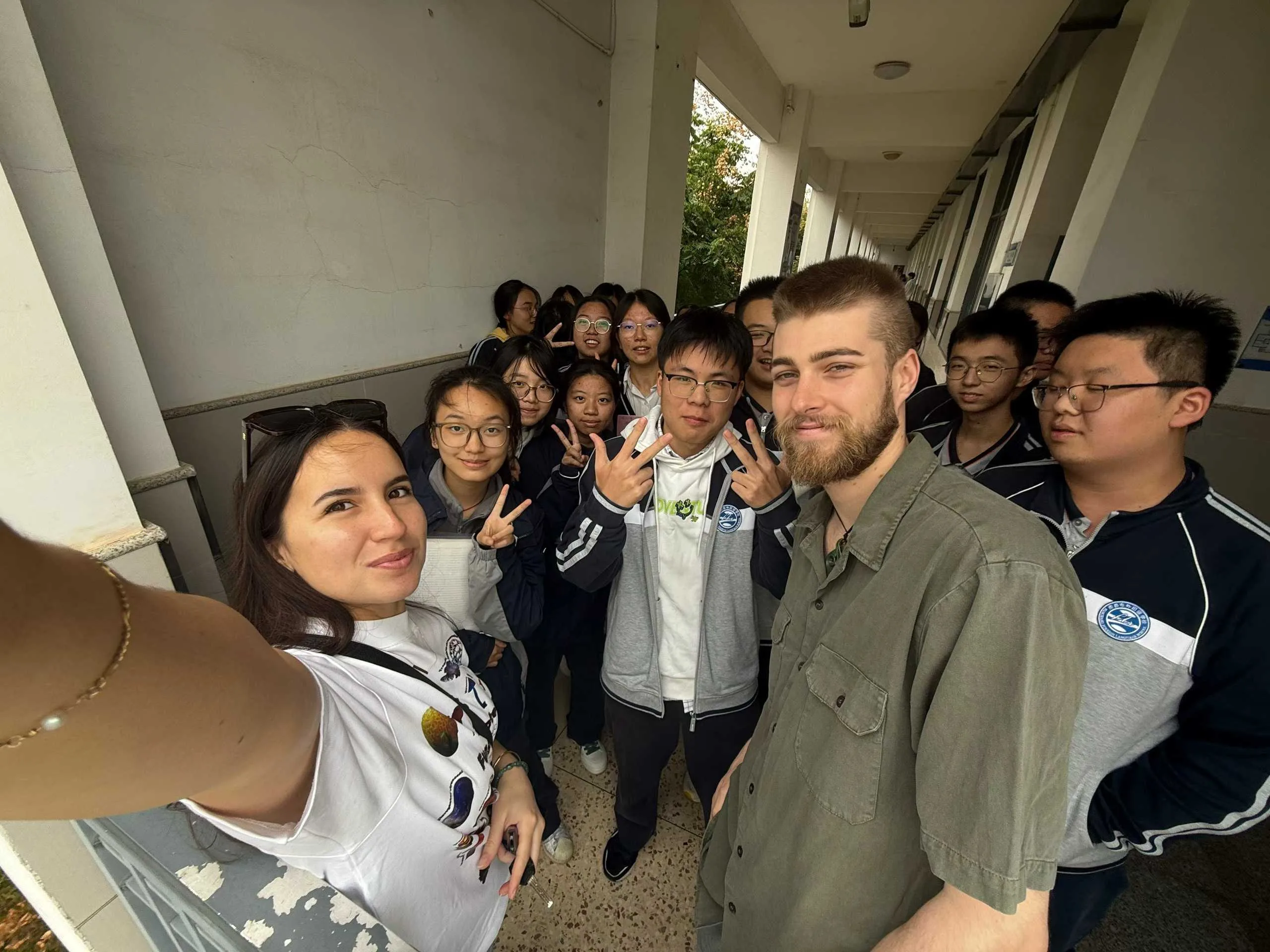
For many people considering overseas volunteering, the idea of standing at the front of a classroom can feel intimidating. But at Nanchang Foreign Language School, two New Zealand volunteers have shown that being a good volunteer is not about being a traditional teacher—it’s about connection, communication, and confidence.
During their three-month placement through the HONGI China Volunteer Programme, Kimberley and Greig worked alongside local English teachers, leading classes both together and individually. Their time in Nanchang offered students something different from their regular lessons, while also giving future volunteers a clear and realistic picture of what the role actually involves.
Rather than focusing on grammar drills or textbook exercises, Kimberley and Greig centred their classes on spoken English, listening skills, and confidence-building. The goal was not perfection, but participation.
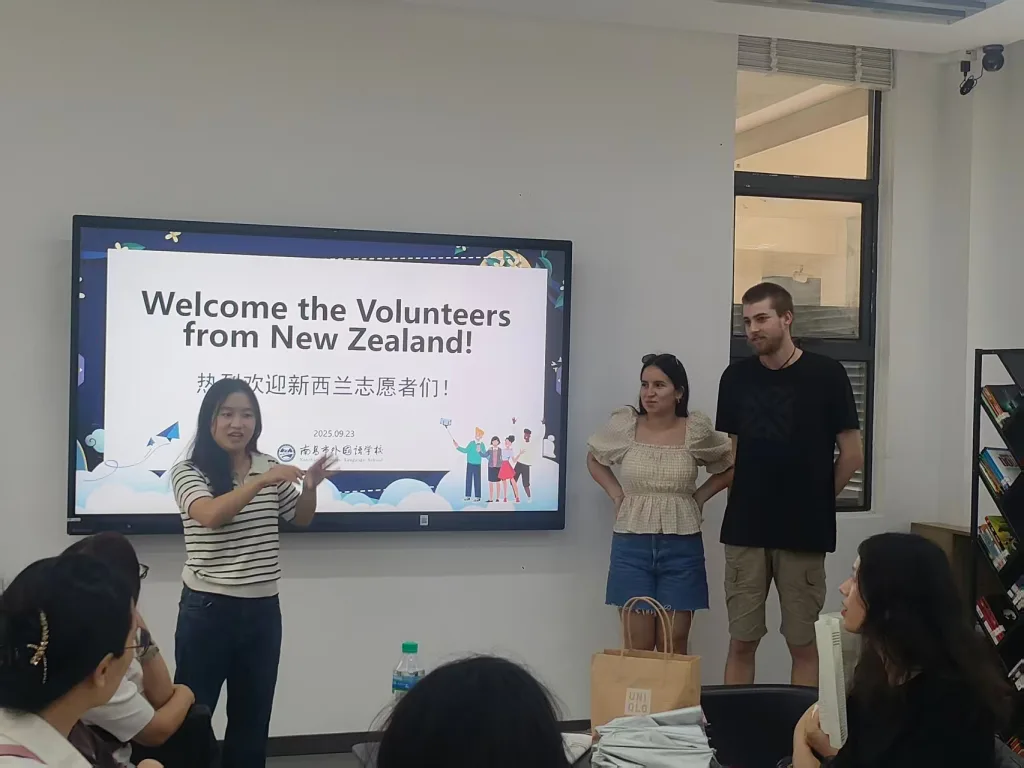
“Our role wasn’t to teach English the way it’s usually taught in a Chinese classroom,” Kimberley explained. “It was about creating a relaxed space where students felt comfortable speaking and trying things out, even if they made mistakes.”
Lessons often included games, storytelling, role-play, and informal conversations. These approaches contrasted with more formal teaching styles and helped students see English as something practical and alive, rather than something to be memorised.
“We wanted students to associate English with enjoyment and communication, not pressure,” she said. “If they’re having fun, they’re learning without even realising it.”
For Greig, being an effective volunteer was less about teaching technique and more about authenticity and presence.
“You don’t need to be a trained teacher,” he said. “What really matters is speaking clearly, projecting your voice, and having the confidence to stand in front of a room.”
Humour also played a big role in breaking down barriers.
“If you’re willing to laugh, tell stories, and not take yourself too seriously, the students respond straight away. That’s when the classroom really comes alive.”
The impact of the volunteers extended beyond the students. Winston, the support teacher assigned to assist them, said their presence brought energy and openness into the school community.
“Having volunteers from New Zealand has been a real pleasure for our school,” he said. “They don’t just support language learning—they share culture, attitudes, and ways of thinking. The students are excited to interact with them, and the atmosphere in the classroom changes in a very positive way.”
He noted that the cultural exchange aspect of the programme was just as important as the language support.
“It’s meaningful for our students to meet people from another country and see how others live and think. This kind of exchange leaves a lasting impression.”
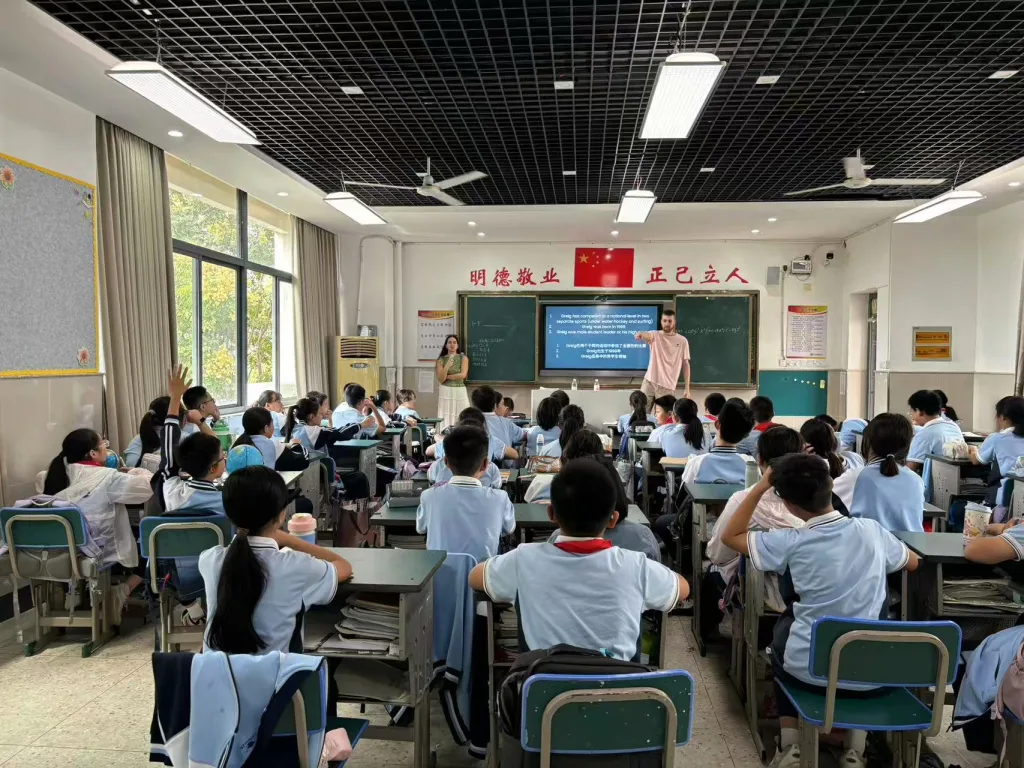
Kimberley and Greig’s experience highlights an important message for anyone considering the programme: being a good volunteer is not the same as being a professional teacher. It’s about engaging students through conversation, encouraging curiosity, sharing everyday culture, and being open, approachable, and adaptable.
“If you enjoy talking to people and you’re willing to step outside your comfort zone, you’ll be fine,” Kimberley reflected. “The students meet you halfway.”
For both volunteers, their time in Nanchang was as much about learning as it was about giving.
“You go in thinking you’ll be helping students practise English,” Greig said. “But you come away having learned a huge amount yourself—about teaching, culture, and communication.”
Experiences like this reflect the heart of the HONGI China Volunteer Programme: creating classrooms filled with energy, genuine cultural exchange, and moments that stay with you long after the programme ends. As the programme continues to expand in 2026, classrooms like those in Nanchang remain central to its mission—building understanding through people-to-people exchange.