One of the defining features of the Hongi Volunteer Programme is that cultural exchange often happens in unexpected places and moments. For New Zealand volunteers Rona and Nikora, one of the most memorable experiences of their time in China came in the form of a challenge they had never anticipated.
During their placement in Jiangxi Province, Rona and Nikora were invited to the Shidongkou Nuo Temple in Shangli, where they were given just five hours to learn and perform a traditional Nuo dance. Neither had encountered Nuo culture before, nor did they fully understand what the experience would involve until they arrived.
“We were told it was an ancient ritual dance and that we had a few hours to learn it,” Rona said. “Once we stepped inside the temple, we realised how significant it really was.”
Nuo is one of China’s oldest surviving ritual traditions, dating back more than two thousand years. Historically performed to drive away evil spirits, ward off illness, and invite blessings, Nuo combines movement, rhythm, and symbolic gesture. In regions like Jiangxi, Nuo practices have been carefully preserved by local communities and passed down through generations, making them a living part of cultural life rather than a performance for display.
Inside the temple, Rona and Nikora were guided by local practitioners through the fundamentals of the dance. Movements were deliberate and grounded, with every step carrying meaning. Rather than learning through explanation, the volunteers learned through observation, repetition, and presence.
“There wasn’t much talking,” Nikora said. “We watched, copied, and slowly started to understand the rhythm and intention behind the movements.”
With only five hours, the experience was intense but immersive. As the afternoon unfolded, both volunteers found themselves becoming increasingly aware that this was more than a dance lesson. It was an introduction to a worldview where performance, spirituality, and community are closely intertwined.
Coming from Māori cultural backgrounds, Rona and Nikora began to notice familiar elements in the practice. The way movement conveyed meaning, the importance of intention, and the role of performance in strengthening community all felt deeply recognisable.
“It reminded me a lot of Māori performance,” Rona reflected. “In haka and other cultural practices, movement isn’t just physical — it carries history, responsibility, and connection. That felt very similar here.”
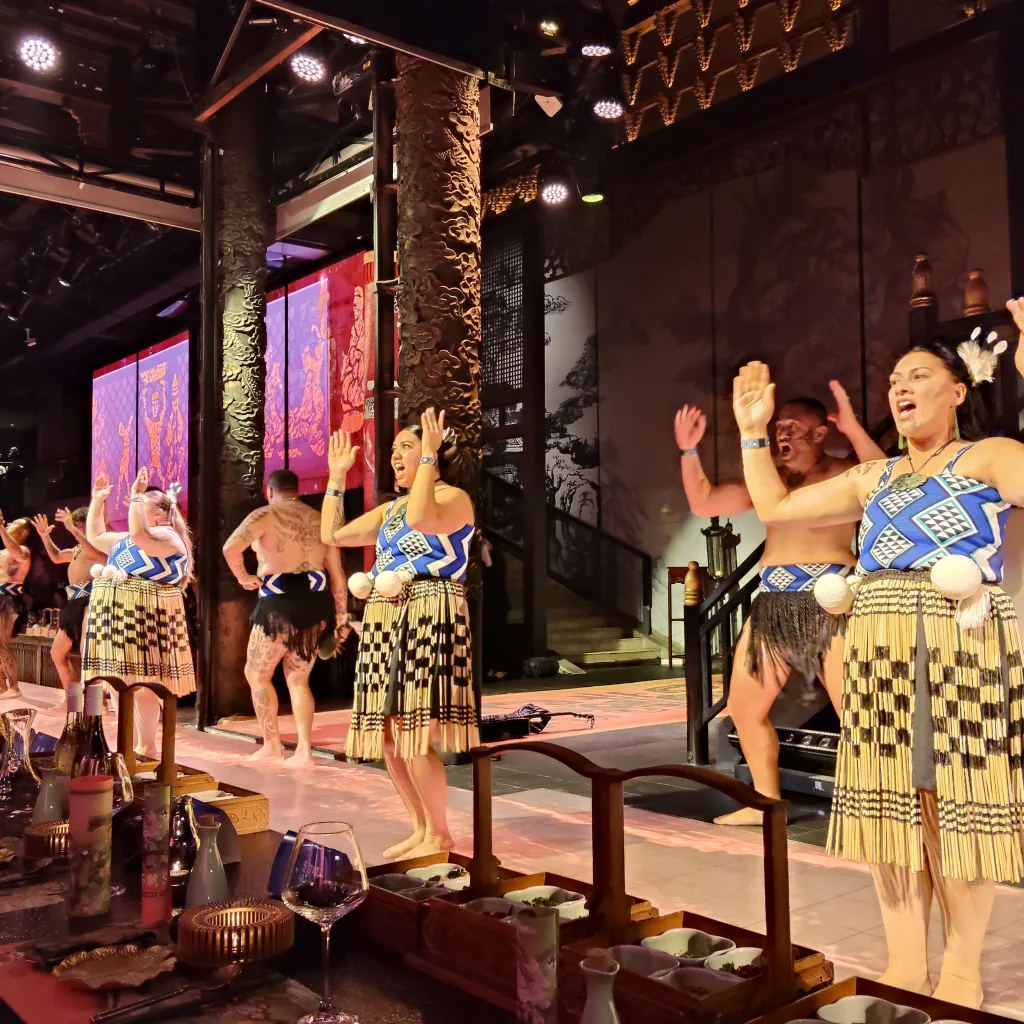
Nikora shared a similar perspective, noting that in both cultures, performance serves a purpose beyond entertainment.
“It’s about protecting the community, acknowledging ancestors, and maintaining balance,” he said. “That’s something that really resonated with me.”
By the end of the five-hour challenge, the volunteers had not only learned the basic structure of the Nuo dance, but had been welcomed into a space that holds deep cultural meaning. Being trusted to participate in such a tradition left a lasting impression.
“That trust meant a lot,” Rona said. “It made the whole experience feel very real and very special.”
Moments like this capture what the Hongi Volunteer Programme aims to create — opportunities for genuine, respectful exchange where learning goes both ways. Volunteers are encouraged to step beyond their comfort zones, engage with local communities, and reflect on the connections between cultures.
For future volunteers, this experience highlights that volunteering in China is not confined to classrooms or city streets. It can involve temples, rituals, and traditions that challenge assumptions and deepen understanding of what culture truly means.
“I didn’t expect something like this when I signed up,” Nikora said. “But it’s one of the experiences I’ll carry with me the longest.”
Through experiences like these, the Hongi Volunteer Programme continues to support meaningful people-to-people connections between New Zealand and China — built through shared experiences, mutual respect, and openness to learning.