For many Hongi volunteers, one of the most powerful ways to connect with students in China is through movement and performance. Language can sometimes be a barrier, but music, rhythm, and shared physical expression create an immediate point of connection.
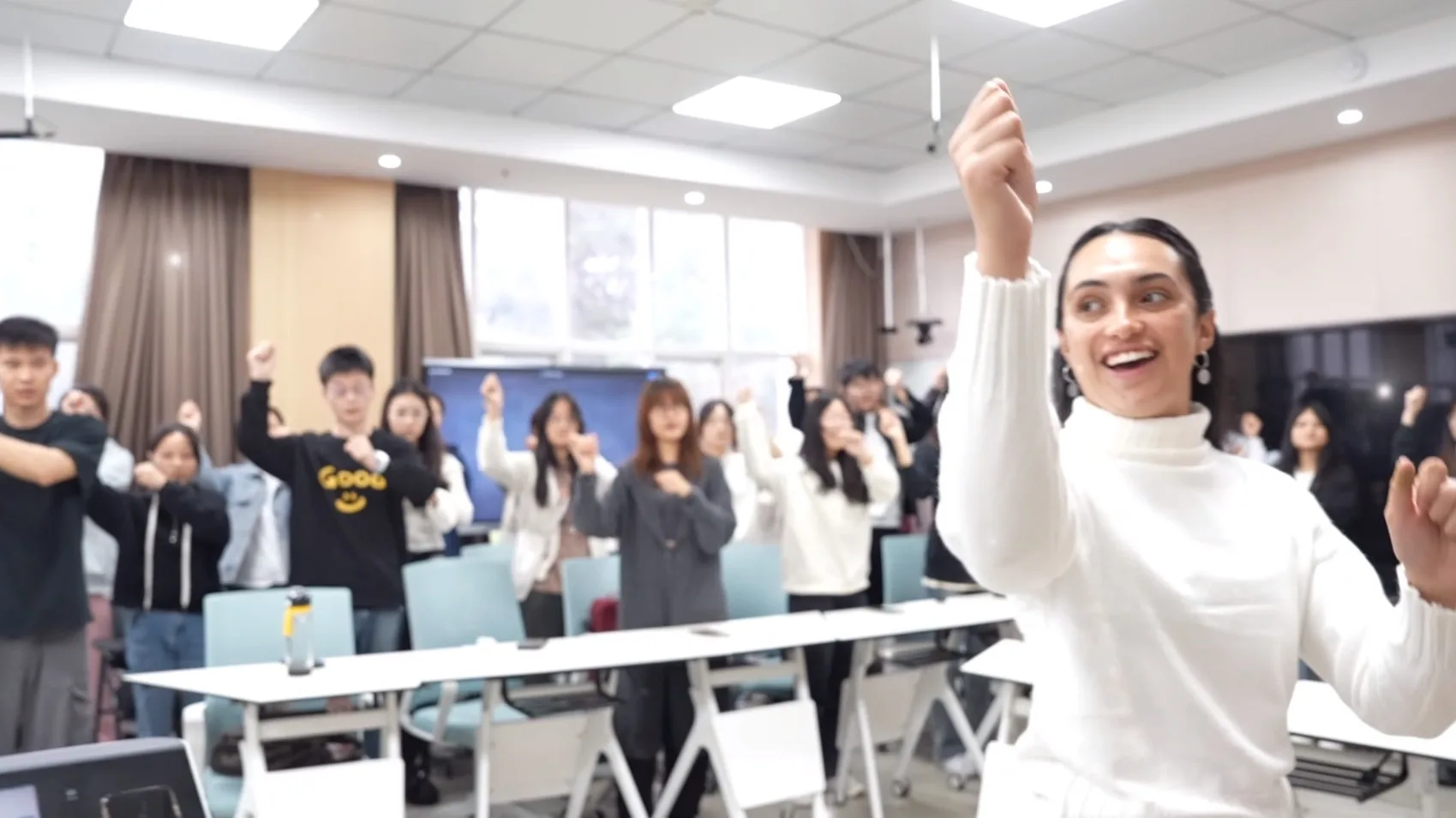
During her three-month placement in China, Manaia brought elements of kapa haka into her classroom and school activities. Through waiata, movement, and storytelling, she introduced her students to Māori culture in a way that was engaging, energetic, and accessible — even for students with limited English.
“I didn’t need to explain everything in words,” Manaia said. “Once we started moving together, the students just got it. They were excited, curious, and fully involved.”
Kapa haka quickly became more than just a cultural demonstration. It became a shared activity where students could participate, ask questions, and express themselves. For many, it was their first time learning about Māori culture directly from a young New Zealander.
At the same time, Manaia found herself learning just as much from her students. Chinese schools place strong value on performing arts, including dance, music, and group presentations. Through school events and classroom activities, she was introduced to Chinese performance styles that emphasise precision, coordination, and collective effort.
“What really stood out to me was how much pride the students take in performing together,” she said. “There’s a strong sense of teamwork and discipline, which actually felt very similar to kapa haka.”
This mutual exchange — sharing Māori culture while learning about Chinese performing arts — is at the heart of the Hongi Volunteer Programme. Volunteers are not sent to China simply to assist with English. They are encouraged to bring their whole selves: their language, culture, interests, and skills.
Performing arts, in particular, often become a natural bridge. Movement helps break down shyness, builds confidence, and creates moments of joy in the classroom. Students who may be quiet during lessons often come alive during performance activities.
“Once we started practising together, everyone relaxed,” Manaia explained. “There was a lot of laughter, but also a lot of respect. It felt like a real exchange, not just teaching one way.”
For future volunteers, experiences like Manaia’s show that you don’t need to be an expert performer or teacher to make a meaningful impact. What matters is openness, willingness to share, and curiosity about learning from others.
Volunteering in China offers the chance to build genuine connections through culture — whether that’s kapa haka, music, sport, art, or everyday conversation. These moments stay with both volunteers and students long after the programme ends.
The Hongi Volunteer Programme creates space for these exchanges to happen naturally, supporting young New Zealanders to live in China, volunteer in schools, and gain a deeper understanding of another culture while proudly sharing their own.